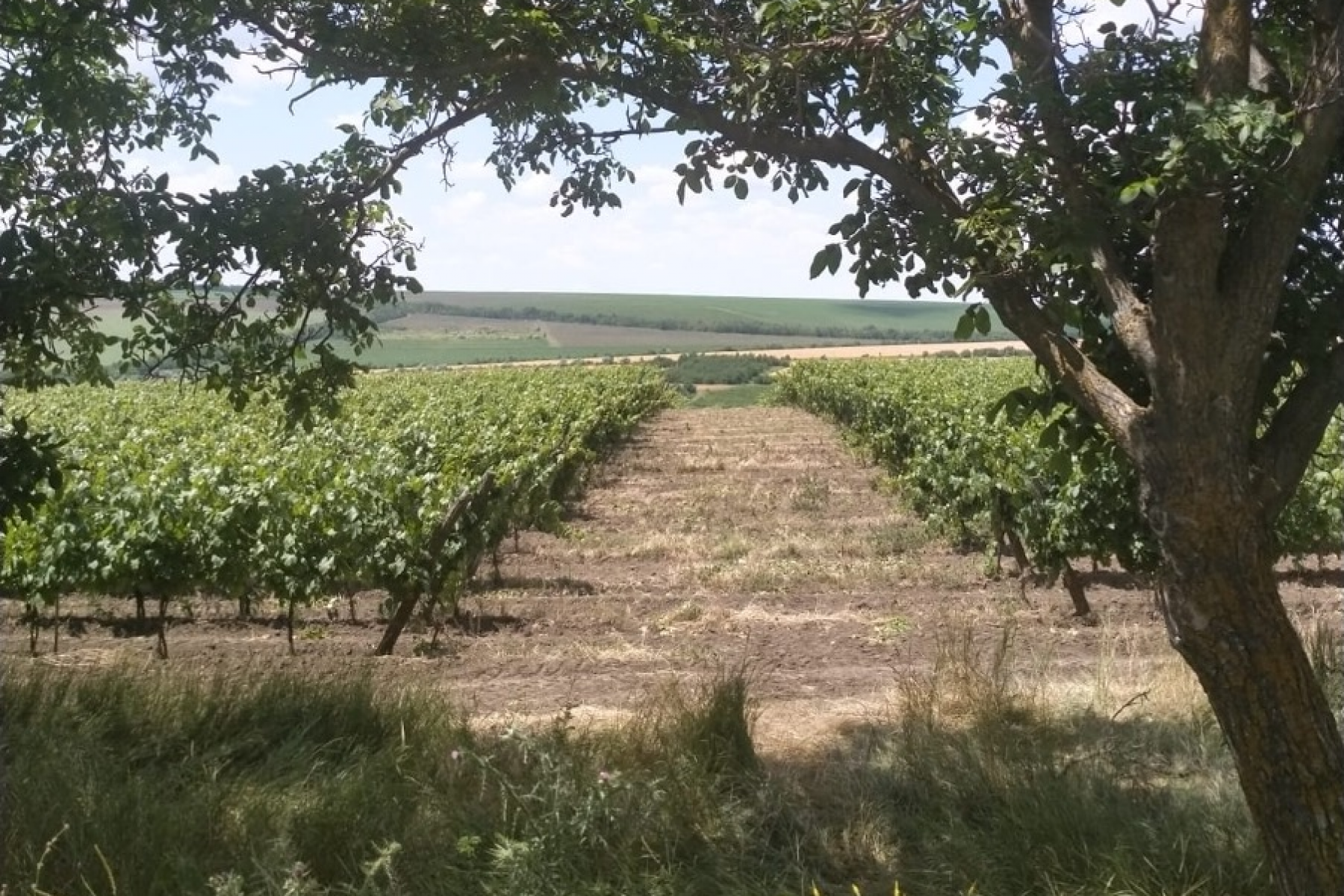
Moldova’s rural areas face ageing populations, migration-driven depopulation, and labor shortages in agriculture, such as viticulture, highlighting the challenges of sustaining rural livelihoods and preserving traditional knowledge in high-value sectors.
The Republic of Moldova’s agricultural sector is experiencing a growing human capital crisis, driven by structural, demographic, and social challenges. Agriculture, once the backbone of the national economy and rural life - including export-oriented sectors such as wine - has seen its workforce shrink sharply over the past two decades. Poverty, precarity, and the emigration of skilled workers, compounded by the threats of climate change, further pose serious challenges to Moldova’s agricultural system, particularly the wine sector.
Statistical data illustrate this trend: Moldova’s agricultural workforce has contracted by approximately 78 percent over the past years, decreasing by roughly 600,000 workers, from about 770,000 in 2000 to an estimated 179,000 in 2023. This decline stems not only from the country’s broader shift toward the service sector but also from the persistent lack of viable economic opportunities in rural areas, combined with job precarity and low wages, which condition the availability and composition of the agricultural workforce. Nevertheless, according to the National Bureau of Statistics’ Labor Force Survey in 2024, the 18.1 % of Moldova’s workforce was employed in agriculture, reflecting the sector’s centrality for national employment, especially among elders.
The demographic and structural drivers of labor decline in Moldova’s agriculture must be situated within broader historical legacies, especially post-Soviet farming restructuration, rural inequalities, migration dynamics, and the lack of state services in rural areas. We zoom in on the challenges facing Moldova’s wine sector, as they illustrate critical labor shortages and the need for policies supporting intergenerational knowledge transfer to ensure farming and production sustainability.
Ageing in the Agricultural Workforce
Rural areas of Moldova disproportionately home elderly households, with 64 percent composed solely of older individuals. The agricultural workforce itself is also ageing: the average age in the sector rose from 43.7 in 2010 to 46.2 in 2022, while the employment of younger cohorts (aged 15–24) in the sector remains particularly low. In horticulture and fruit growing, a majority of workers are over 55 years old. Increased age among agricultural workers represents a challenge because it limits capacity and endurance required for demanding physical tasks. In addition, social marginalization, limited subsistence means, reduced access to services, and limited formal employment opportunities are particularly pronounced among the elderly in rural areas. They often also must assume caregiving responsibilities of the “migration orphans” - children left behind when parents work abroad.
Understanding why rural agriculture in Moldova remains heavily reliant on older workers and why younger generations are discouraged from entering the sector requires examining the economic, institutional, and social factors at play. The historical legacies of Moldova’s agricultural sector, including Soviet-era collectivization, post-independence land reforms, and neo-liberal transformations all play a role in such developments.
Historical Legacies: Soviet Collectivization, Land Reform, and Rural Inequalities
Soviet-era collectivization reshaped Moldova’s rural economy by centralizing land and agricultural production under state-run farms. The state centralized control over production and introduced standardized practices, altering traditional farming methods and local decision-making processes, and thereby leaving a lasting impact on land use and rural organization.
Following the end of the Soviet Union, land redistribution reforms in the 1990s, combined with economic precarity and social inequality derived from market liberalization, left most farmers without sufficient production infrastructure and community support. Many preferred to lease their plots, allowing new rural elites to establish control over production, networks, and resources. These changes contributed to the concentration of large-scale commercial farms, while limiting, among other things, local producers’ access to major distribution channels.
In the following years, investment in agriculture remained low, mainly due to budgetary constraints, inefficient management, and a lack of coordinated development projects. This underinvestment also extended to agricultural education and training at both high school and university levels, limiting the availability of a skilled workforce. Together, these factors represent challenges that have persisted for more than 30 years after Moldova’s independence.
Rural Depopulation, Poverty, and Informality
In addition, since 1991, migration has increasingly affected Moldova’s rural areas. This demographic shift is driven by high rates of internal and external migration: many young people leave villages in search of higher incomes and better access to services in urban centres, especially in Chișinău, or in European countries such as Germany. In many rural households, at least one family member works abroad, sending remittances to relatives remaining in Moldova (personal remittances represented 10% of the country’s GDP in 2024). As a result, many villages experience the mass emigration of working-age residents aged 20–50, as many young people leave for Europe, where even seasonal agricultural jobs offer higher and more stable pay. In addition, public services often fail to meet the needs of locals; for instance, there is a lack of doctors and teachers. These combined factors contribute to the emergence of “ghost villages,” where mostly elderly residents are the only ones who stay.
Another factor contributing to the lack of workers in Moldova’s rural areas is the high rate of poverty in villages, combined with significant emigration. The State of the Country Report 2024 indicates an absolute poverty rate of 33.6 %, with rural households and smallholder farmers disproportionately affected. Many rural households earn below the national average, which makes agriculture less attractive as a work option.
It follows that rural poverty is related to low wages, seasonal work, and informal labor arrangements. In large-scale agricultural companies, labor is often seasonal and irregularly paid, reinforcing precarity and poverty. Informality is widespread: over 56 % of agricultural workers lack formal contracts, restricting their access to pensions, sickness benefits, and unemployment protections. Yet informality also sustains the livelihood of small communities. For instance, during the grape harvest, neighbors and family members often work together in the fields, providing mutual support through informal labor. The wine produced is frequently shared or gifted to relatives and former members of the village’s community, including those who live far, helping maintain social ties and local traditions alive.
Labor Shortages in High-Value Sectors: the case of Viticulture
Viticulture is a key sector in Moldovan economy, elected as the national symbol of the country. Yet the shortage of qualified workers is particularly acute in such high-value sectors, where technical expertise, knowledge of the production and supply chain, and strict adherence to quality standards are required. Wineries increasingly require skilled workers, such as enologists and Quality Assurance Managers (RAQ) for process control. At the same time, roles such as pruning and grape harvesting demand other essential skills that carry knowledge transmitted from generation to generation, but remain difficult to fill due to the rising age of workers, the demands of seasonal labor, and low financial compensation. This human and technical capital underpins the broader structural importance of the wine sector for Moldova’s economy, as the sector accounts for more than 5% of total exports and spans approximately 110,000 hectares of vineyards, giving Moldova one of the highest vineyard areas per capita in the world. Both state support and regulation are required to provide better-paid jobs and secure working conditions for aging workers to ensure the transmission of knowledge, guide younger generations, and preserve winemaking traditions.
Beyond the challenges of workforce shortages, youth emigration, and informal employment, the wine sector is among the most expensive to enter, with most producers inheriting land, machinery, knowledge, and export contacts from relatives. Without targeted incentives, new entrants, especially small firms, face significant barriers, and the sector risks remaining dominated by established companies, limiting economic inclusion. Here, promoting long-term investments, both public and private, would be necessary to support the development of the sector along three priority areas.
First, interventions should aim to improve labor conditions, increase wages, and reduce precarity, addressing the vulnerability of seasonal and informal workers.
Second, rural infrastructure needs improvement, in particular roads and public transportation as well as improved public services like schools, to encourage families to remain or return to these areas.
Third, small and medium winemaker enterprises could benefit from grants, lower taxation, low-interest or non-repayable loans for machinery, training courses, or premiums for following conservation agriculture principles. With global preferences shifting towards bio-organic wine, state support and adequate incentives will be essential to promote conversion to this form of production.
This article is based on data collected by the author's PhD project, Navigating EU Standards by Winemakers in Georgia and Moldova: External Pressures, Informal Practices and the Quest for EUropean Identity and supported by a Marie Curie Staff Exchange under the Horizon Europe Programme (PRELAB, Grant Agreement No. 101129940).
Header picture courtesy of the author.